|
It really breaks my heart to know that we didn't know this goes
on every Friday, well at least I didn't know. Instead, I guess
the media feels it's more important to report on Hollywood stars
as heroes. I hope this article gives you a sense of pride for
what our men and women are doing for us, every day, as they
serve in the armed forces here and abroad.
Mornings at
the Pentagon
By JOSEPH L. GALLOWAY
McClatchy Newspapers
Over the
last 12 months, 1,042 soldiers, Marines, sailors and Air Force
personnel have given their lives in the terrible duty that is
war.
Thousands more have come home on stretchers,
horribly wounded and facing months or years in military
hospitals.
This week, I'm turning my space over to a good friend and former
roommate, Army Lt. Col. Robert Bateman, who recently completed a
year-long tour of duty and is now back at the Pentagon.
Here's Lt. Col. Bateman's account of a little-known ceremony
that fills the halls of the Army corridor of the Pentagon with
cheers, applause and many tears every Friday morning. It first
appeared on May 17, on the Weblog of media critic and pundit
Eric Alterman at the Media Matters for America Website.
|
|
|
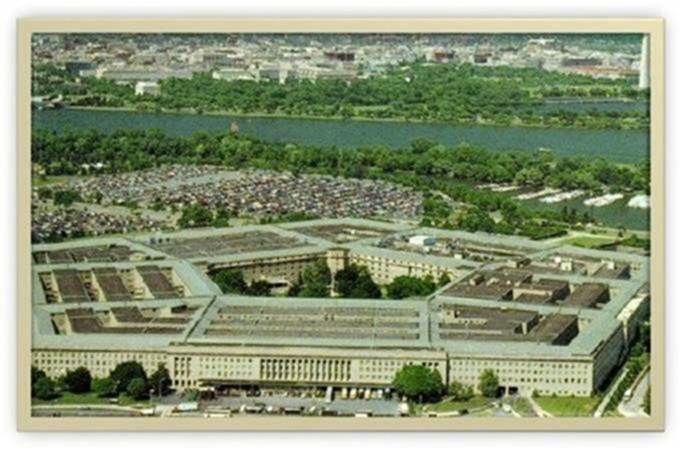
"It is 110
yards from the "E" ring to the "A" ring of the Pentagon. This section of
the Pentagon is newly renovated;
the floors
shine, the hallway is broad, and the lighting is bright. At this instant
the entire length of the corridor is packed with officers, a few
sergeants and some civilians, all crammed tightly three and four deep
against the walls. There are thousands here.
This hallway, more than any other, is the `Army' hallway. The G3 offices
line one side, G2 the other, G8 is around the corner. All Army. Moderate
conversations flow in a low buzz. Friends who may not have seen each
other for a few weeks, or a few years, spot each other, cross the way
and renew.
Everyone shifts to ensure an open path remains down the center. The air
conditioning system was not designed for this press of bodies in this
area.
The temperature is rising already. Nobody cares. "10:36 hours: The
clapping starts at the E-Ring. That is the outermost of the five rings
of the Pentagon and it is closest to the entrance to the building. This
clapping is low, sustained, hearty.
It is
applause with a deep emotion behind it as it moves forward in a wave
down the length of the hallway.
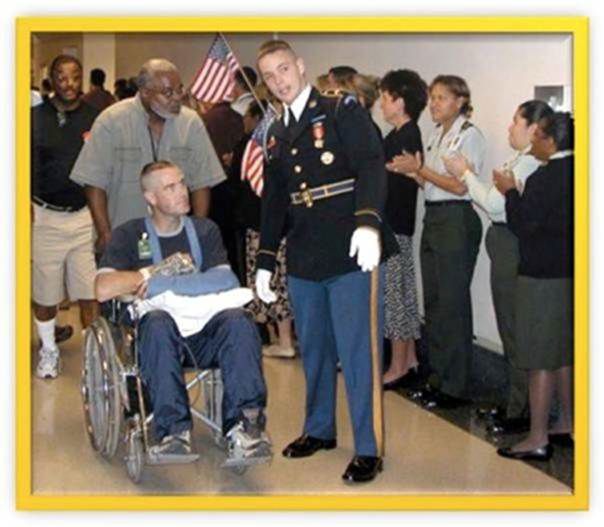
A steady rolling wave of sound it is, moving at the pace of the soldier
in the wheelchair who marks the forward edge with his presence. He is
the first. He is missing the greater part of one leg, and some of his
wounds are still suppurating. By his age I expect that he is a private,
or perhaps a private first class.
Captains, majors, lieutenant colonels and colonels meet his gaze and nod
as they applaud, soldier to soldier. Three years ago when I described
one of these events, those lining the hallways were somewhat different.
The applause a little wilder, perhaps in private guilt for not having
shared in the burden ... Yet.
Now almost everyone lining the hallway is, like the man in the
wheelchair, also a combat veteran. This steadies the applause, but I
think deepens the sentiment. We have all been there now. The soldier's
chair is pushed by, I believe, a full colonel.
|
|
"Behind him,
and stretching the length from Rings E to A, come more of his peers,
each private, corporal, or sergeant assisted as need be by a field grade
officer.
"11:00 hours: Twenty-four minutes of steady applause. My hands hurt, and
I laugh to myself at how stupid that sounds in my own head. My hands
hurt. Please! Shut up and clap. For twenty-four minutes, soldier after
soldier has come
down this
hallway - 20, 25, 30.. Fifty-three legs come with them, and perhaps only
52 hands or arms, but down this hall came 30 solid hearts.
"They pass down this corridor of officers and applause, and then meet
for a private lunch, at which they are the guests of honor, hosted by
the generals. Some are wheeled along. Some insist upon getting out of
their chairs, to march as best
they can
with their chin held up, down this hallway, through this most unique
audience. Some are catching handshakes and smiling like a politician at
a Fourth of July parade. More than a couple of them seem amazed and are
smiling shyly.
"There are families with them as well: the 18-year-old war-bride pushing
her 19-year-old husband's wheelchair and not quite understanding why her
husband is so affected by this, the boy she grew up with, now a man, who
had never shed
a tear is
crying; the older immigrant Latino parents who have, perhaps more than
their wounded mid-20s son, an appreciation for the emotion given on
their son's behalf. No man in that hallway, walking or clapping, is
ashamed by the silent tears on more than a few cheeks. An Airborne
Ranger wipes his eyes only to better see. A couple of the officers in
this crowd have themselves been a part of this parade in the past.
"These are our men, broken in body they may be, but they are our
brothers, and we welcome them home. This parade has gone on, every
single Friday, all year long, for more than four years.
|